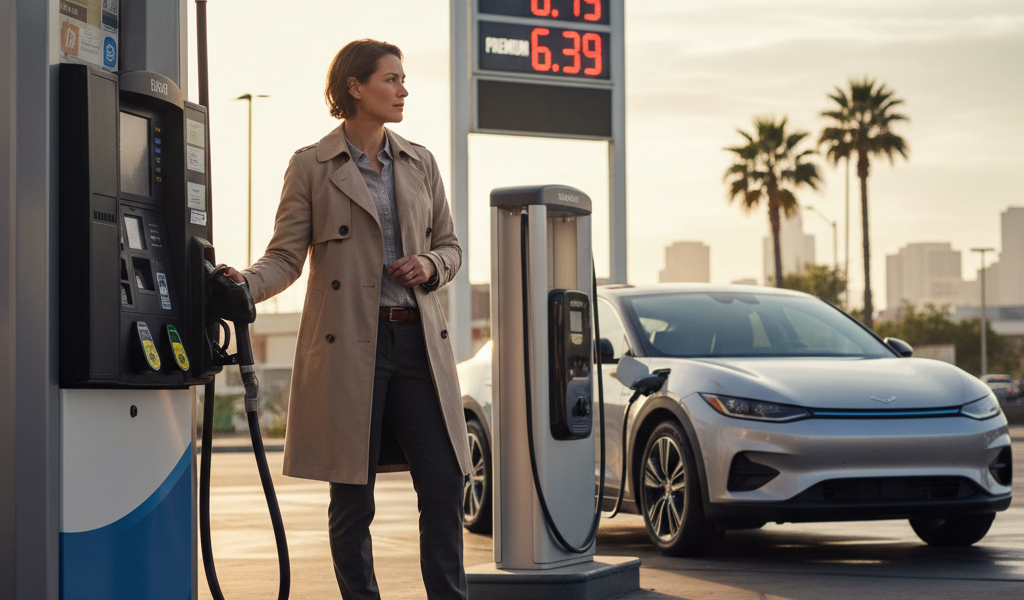
Alright, folks, let’s talk about something that’s hitting all of us right in the wallet: gas prices. You’ve seen the numbers climbing at the pump, especially with all the geopolitical turmoil happening. It’s enough to make anyone with a long commute or a family road trip planned seriously consider alternatives. And guess what? This surge in fuel costs is absolutely sparking a massive wave of EV interest across the country. I’m seeing it, you’re seeing it, and the data backs it up.
Edmunds, the car shopping gurus, reported a jump in electrified vehicle consideration (that’s hybrids, PHEVs, and pure battery EVs) to 22.4% of all vehicle research traffic, up from 20.7% just the week before the recent gas price spikes. Other sources show that electrified vehicle consideration reached 23.8% on Edmunds for the week of March 9-15, 2026, the highest weekly level so far this year. CarGurus saw views of new EV listings rise nearly 10% and used EV listings climb almost 15% in early March alone. It’s clear: when gas prices go up, people start looking for an escape from the pump. We saw a similar surge in EV interest back in 2022 when gas prices soared due to the Russia-Ukraine conflict.
The Head-Scratching Disconnect: Why Aren’t Sales Keeping Up?
Here’s the kicker, and it’s the elephant in the room that we at GoEVDaily.com need to address: despite this undeniable surge in EV interest, actual EV sales aren’t exactly skyrocketing. In fact, 2025 saw a slight decrease in US EV sales compared to 2024. While global electric car sales exceeded 17 million in 2024, with over 20% of new cars sold worldwide being electric, the US market only saw a 10% increase in EV sales in 2024, a significant slowdown from the 40% growth in 2023. So, what gives? Why the disconnect between intense consumer trends and slower EV adoption?
From where I’m sitting, and from talking to countless EV owners and potential buyers, there are a few big reasons:
1. The Upfront Cost Hurdle is Real
Let’s be blunt: electric vehicles often come with a higher sticker price than their gasoline counterparts. While average new EV prices dropped to around $55,500 in late 2024, that’s still about 12% higher than the overall new car average of $49,700. For many American families, that initial investment is a tough pill to swallow, especially with higher car financing costs making any new vehicle purchase less attractive. Even with the long-term savings on fuel and maintenance (which are substantial, by the way – an EV can cost less than half to operate per year compared to a gas car), that immediate hit to the bank account is a major deterrent. The expiration of federal tax credits at the end of September 2025 didn’t help matters, causing a sharp decline in Q4 2025 EV sales.
2. Range Anxiety and the Charging Conundrum
Ah, range anxiety. It’s the boogeyman under the bed for many potential EV buyers. Even though modern EVs boast impressive ranges (many over 300 miles!), the fear of running out of juice on a long road trip or during a highway commute is a powerful one. And let’s be honest, the charging infrastructure, while growing, still has some serious catching up to do. Finding a reliable, conveniently located public fast charger, especially in rural areas or on less-traveled routes, can still be a challenge. I’ve been there, staring at a broken charger when I’m 200 miles from home. It’s frustrating, and it erodes confidence in EV adoption. Studies show public charging stations in the U.S. have an average reliability score of only 78%, meaning one in five don’t work. That’s just not good enough.
3. The Used EV Market: A Double-Edged Sword
On one hand, the growing used EV market is a fantastic opportunity for those looking for a more affordable entry point into electric vehicles. Used EV prices dropped more than 20% on average in 2024, with some Tesla models falling over 30% from their highs. You can snag some great deals on models that are just a few years old. However, this depreciation can also be a concern for new EV buyers, who worry about the resale value of their investment. It’s a classic chicken-and-egg scenario.
Practical Takeaways for the EV Curious and Committed:
- Do Your Homework on Total Cost of Ownership: Don’t just look at the sticker price. Factor in fuel savings (huge!), lower maintenance costs, and potential state or local incentives. Over five years, roughly half of EV models are now cheaper to own than similar gas cars.
- Embrace Home Charging: If you can install a Level 2 charger at home, do it. It’s a game-changer for convenience and often the most cost-effective way to charge. The average annual cost for home charging is around $675, compared to $2,220 for gas.
- Plan Your Road Trips: With apps like PlugShare and A Better Routeplanner, you can map out charging stops with confidence. The infrastructure is improving, just needs a little planning.
- Consider Used EVs: If the upfront cost of a new EV is a barrier, explore the robust used EV market. There are some incredible values to be found.
Looking Ahead: The Future is Still Electric
Despite the current lag in sales conversion, the long-term outlook for electric vehicles remains incredibly bright. The rising gas prices are a constant reminder of our reliance on volatile global oil markets, and the economic case for EVs only strengthens with each pump price hike. Electricity prices are far more stable than gasoline prices.
Automakers are launching more affordable EV models, increasing model availability by 15% in 2024 alone. The charging infrastructure is expanding, albeit not fast enough, with a significant boost in DC fast chargers. We’re seeing more public-private partnerships focused on building a robust and reliable charging network.
The current situation is a temporary speed bump, not a roadblock. Consumer interest in EVs is at an all-time high, and as the industry addresses the challenges of upfront cost and charging infrastructure, that interest *will* translate into sales. I’m confident that we’ll look back at this period as a crucial turning point, a time when America truly started to embrace the electric revolution. The journey might have a few detours, but the destination is undeniably electric.