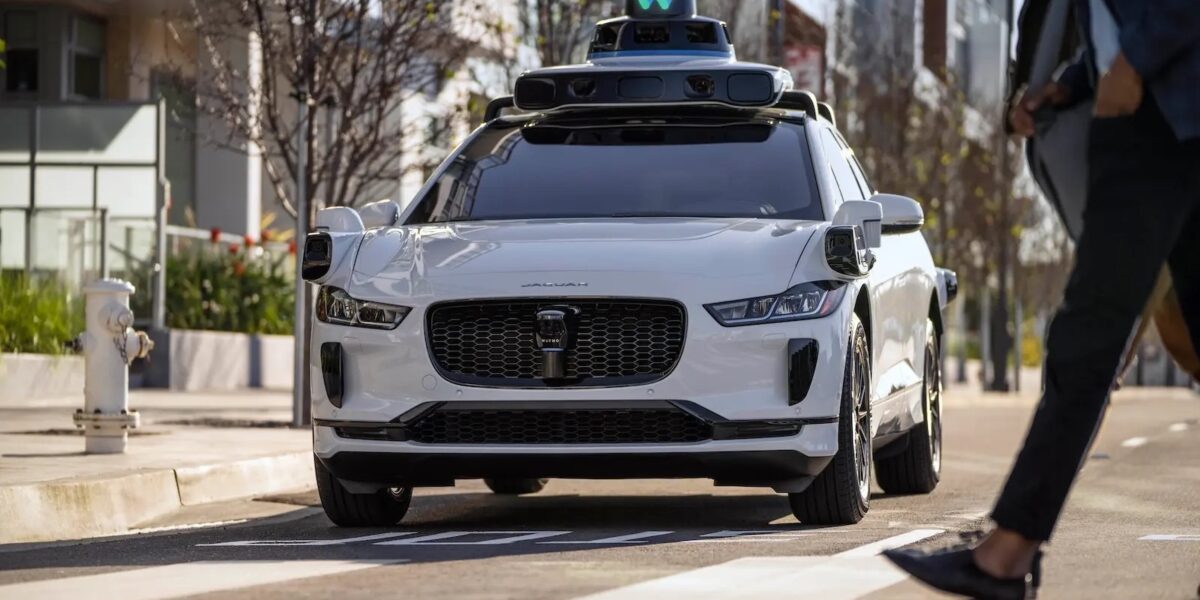
Alright GoEVDaily readers, let’s talk about something truly significant that recently crossed my desk. You know how we’re always discussing the future of electric vehicles, and how often that conversation intertwines with autonomous driving? Well, a new report from Waymo, Google’s self-driving car company, just dropped some pretty compelling data that could fundamentally shift how we view the safety of these robo-taxis – and by extension, the future of our own autonomous EVs.
Waymo is making a bold claim: their autonomous vehicles are involved in accidents resulting in serious injury or fatality at a rate 13 times lower than human-driven cars. Thirteen times! That’s not a small difference; that’s a chasm. It’s the kind of statistic that, if it holds up over time, could redefine urban mobility and, frankly, save countless lives.
Now, I know what some of you are thinking: ‘But Waymo hasn’t been around long enough to truly prove anything.’ And that’s a fair point to consider. However, we’re not talking about a few thousand miles here. Waymo has logged nearly 200 million fully autonomous miles across its fleet. That’s a staggering amount of real-world, driverless experience. Think about it: that’s like driving to the moon and back over 400 times without a human at the wheel. That’s a lot of data points.
This isn’t just about Waymo’s success; it’s about the broader implications for the EV market. As electric vehicles become more sophisticated, the integration of advanced driver-assistance systems (ADAS) and eventually full autonomy is inevitable. If Waymo, a pioneer in this space, can demonstrate such a dramatic improvement in safety, it provides a powerful blueprint for other automakers developing their own autonomous EV platforms.
For us as EV buyers, this data offers a glimpse into a potentially much safer future. Imagine a world where the risk of a serious car accident is drastically reduced simply by opting for an autonomous vehicle. It could alleviate a lot of the ‘range anxiety’ we sometimes discuss, replacing it with ‘safety assurance’ as a key selling point for advanced EVs.
It also provides crucial ammunition against the skepticism that often surrounds autonomous technology. Every time there’s an incident involving a self-driving car, it makes headlines. But what often gets lost in the noise is the sheer volume of uneventful, safe miles logged. Waymo’s report helps to quantify that silent majority of safe journeys.
Of course, this isn’t a definitive victory lap. The journey to widespread autonomous adoption is long and complex, involving regulatory hurdles, public perception, and continuous technological refinement. But these early statistics are incredibly promising and provide a strong foundation for future development.
As we continue to push for an all-electric future, the safety aspect becomes paramount. If EVs can not only offer zero emissions but also significantly reduce the risk of serious injury or fatality on our roads, then the value proposition becomes almost irresistible. This report suggests we’re on the right track.
Bottom Line
Waymo’s report, while still representing an evolving dataset, offers a compelling argument for the safety benefits of autonomous vehicles, potentially making future EV ownership not just greener, but significantly safer for everyone on the road.
This article is based on reporting from CleanTechnica. Analysis and commentary are original to GoEVDaily.