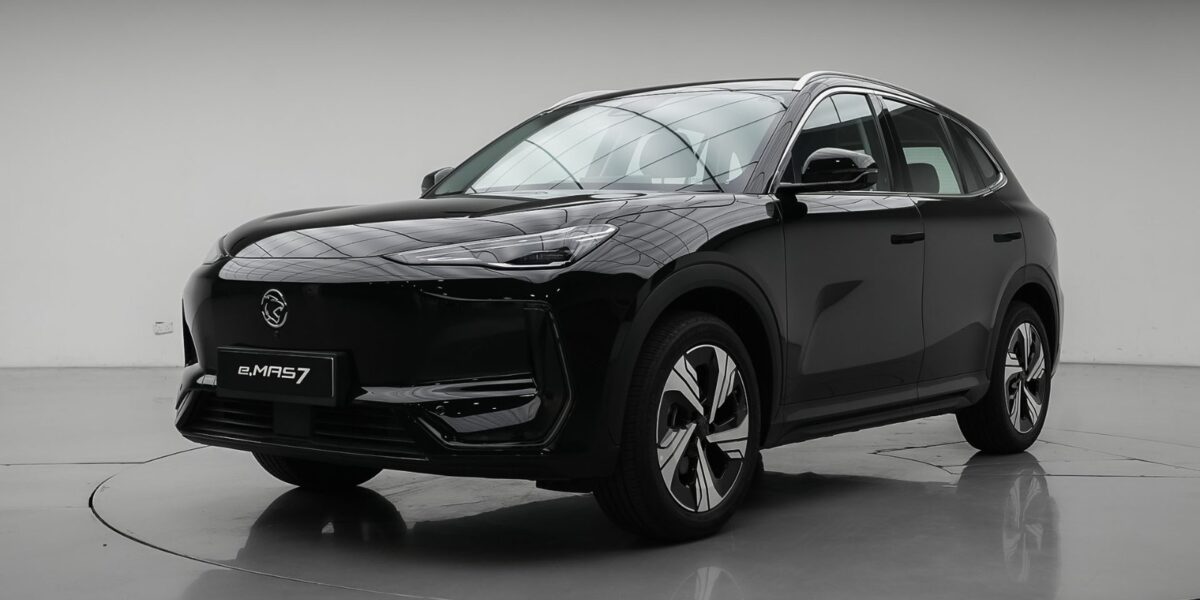
Alright, GoEVDaily readers, let’s talk about something truly interesting happening in the automotive world, specifically over in Malaysia. We often hear the argument that EVs won’t take off in markets where gasoline is cheap. But what if I told you a national carmaker, in a country with heavily subsidized fuel, is absolutely crushing it with electric vehicle sales? Because that’s precisely what Proton is doing.
Proton, a name familiar to many in Southeast Asia, just posted its best quarterly sales performance since way back in 2004. We’re talking 49,140 units delivered in the first three months of this year. That’s a staggering 40.1% jump year-on-year. And here’s the kicker: this happened while the overall Malaysian car market actually shrunk by almost 5%.
This isn’t just a win for Proton; it’s a significant indicator for the global EV movement. Malaysia’s fuel prices are famously low, thanks to government subsidies. Conventional wisdom would suggest this creates a massive disincentive for consumers to switch to electric. Why pay more upfront for an EV when filling up your gas tank barely dents your wallet?
Yet, Proton is proving that narrative wrong. Their success, even with cheap gas, highlights a few critical factors at play. For one, it points to the increasing appeal of EVs beyond just fuel cost savings. Think about the instant torque, the quiet ride, and the reduced maintenance – these are powerful selling points regardless of pump prices.
It also speaks volumes about the maturity and attractiveness of the EV models Proton is offering. When a local brand, deeply embedded in the market, manages to convince buyers to go electric despite the economic ‘disadvantage,’ it means their product is hitting all the right notes. It suggests that factors like design, features, and brand trust are outweighing the traditional fuel cost calculus.
Furthermore, this kind of growth in a challenging market often signals strong government support for EV adoption, even if it’s not directly through fuel price parity. Incentives, charging infrastructure development, and public awareness campaigns can all play a crucial role in shifting consumer behavior, even when gasoline is practically free.
What this tells us, as prospective EV owners and enthusiasts, is that the transition to electric vehicles isn’t solely dependent on the price of oil. While high fuel costs certainly accelerate adoption, this Malaysian example demonstrates that a compelling product, coupled with broader societal shifts and supportive policies, can drive demand even in the most unlikely of scenarios.
It’s a testament to the fact that the inherent benefits of EVs are becoming more widely recognized and valued by consumers globally, transcending traditional economic barriers. This trend will only strengthen as EV technology continues to improve and become more affordable.
Bottom Line: Proton’s record sales in Malaysia, despite cheap subsidized fuel, powerfully illustrate that EV appeal extends far beyond just fuel savings. It’s a clear signal that product quality, brand trust, and the inherent advantages of electric driving are increasingly powerful motivators for consumers worldwide.
This article is based on reporting from CleanTechnica. Analysis and commentary are original to GoEVDaily.