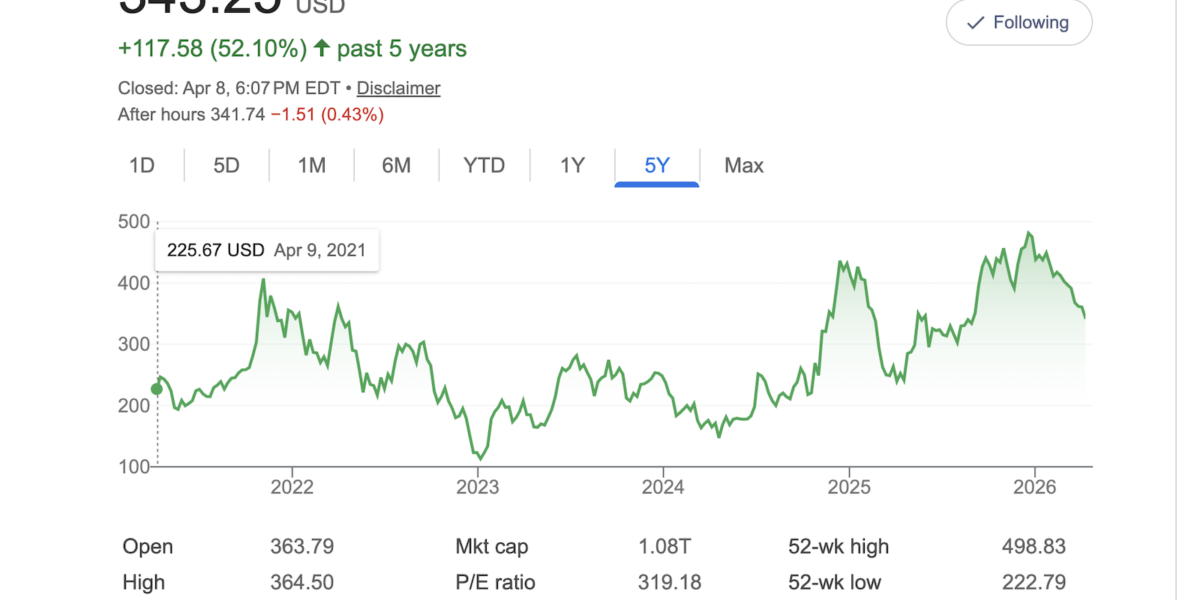
Alright, GoEVDaily readers, let’s talk about something that’s been buzzing in the financial corners of the EV world, and honestly, it’s something every potential EV owner or enthusiast should understand: Tesla’s stock valuation. You might’ve seen headlines, or perhaps a friend who dabbles in stocks has mentioned it, but the gist is this: Tesla’s Price-to-Earnings (P/E) ratio is, well, pretty wild.
For those not steeped in Wall Street jargon, the P/E ratio is a basic metric used to value a company. It essentially tells you how much investors are willing to pay for each dollar of a company’s earnings. A high P/E often indicates that investors expect significant future growth. But how high is too high?
Recently, even after a notable dip in Tesla’s stock price over the last six months, its P/E ratio has remained remarkably elevated—sometimes in the hundreds, whereas industry averages for established automakers might be in the single or low double digits. This isn’t just a quirky financial detail; it’s a fundamental aspect of how the market perceives Tesla, and by extension, the broader EV landscape.
Now, you might be thinking, ‘Why should I care about stock numbers when I’m just trying to figure out which EV to buy?’ Great question! Here’s why it matters: Tesla’s valuation has long been a bellwether for the entire EV sector. When Tesla’s stock performs strongly, it often boosts investor confidence in other EV startups and established players making the transition.
However, an extremely high P/E also signals a unique kind of pressure. Tesla isn’t just valued as a car company; it’s seen by many as a tech giant, an AI leader, a battery innovator, and even an energy provider. This expansive narrative justifies, in investors’ eyes, a valuation far beyond what traditional automotive manufacturing would command.
The flip side of this sky-high expectation is that Tesla needs to constantly deliver groundbreaking innovation and massive growth to sustain it. Any perceived slowdown in sales, a hiccup in production, or a competitive threat can send tremors through the stock, as we’ve seen recently. This constant need for ‘moonshots’ can influence everything from pricing strategies to product development cycles.
For you, the consumer, this translates to a dynamic, sometimes volatile, market. Tesla’s aggressive pricing adjustments, for instance, are often scrutinized through the lens of maintaining growth to justify its valuation. It means a company under immense pressure to innovate, which can be a good thing for technology advancements, but also means they’re constantly walking a tightrope.
It also highlights a fascinating dichotomy: the market’s perception of Tesla versus its competitors. While legacy automakers like Ford or GM are making significant strides in EVs, their P/E ratios remain comparatively modest, reflecting a more traditional valuation based on current earnings and established market share, rather than pure future potential.
This isn’t to say Tesla’s valuation is ‘wrong’ or ‘right,’ but it’s certainly unique. It reflects a belief in its transformative power that extends far beyond just selling electric cars. But it also means the company is held to an almost impossibly high standard by the market.
Bottom Line: Tesla’s ‘nuts’ P/E ratio is a reflection of intense investor confidence in its future potential, but it also creates immense pressure for the company to continually innovate and grow. For EV buyers, this means a dynamic market where Tesla’s moves often set the pace, influencing pricing and technological advancements across the entire electric vehicle industry.
This article is based on reporting from CleanTechnica. Analysis and commentary are original to GoEVDaily.