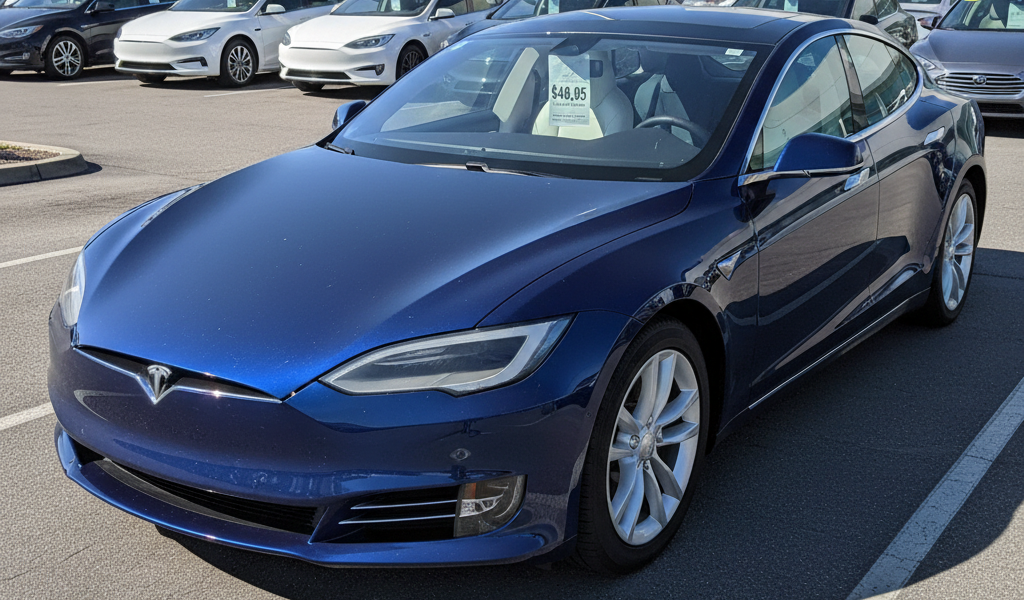
Remember that old saying about a new car losing a huge chunk of its value the second you drive it off the lot? Well, for years, the narrative around electric vehicles (EVs) was even worse: a tech-heavy gamble that would depreciate faster than a lead balloon in a vacuum. I heard it all the time, even from friends and family:
“JC, aren’t you worried that battery will be worthless in five years?”
“What if the tech becomes obsolete overnight?”
And for a while, there was some truth to those concerns. Early EVs, with their limited range and fledgling charging infrastructure, did see steeper initial depreciation. But just like range anxiety, that fear of plummeting resale value is rapidly becoming a relic of the past. The EV market is maturing, and with it, so is our understanding of their long-term value.
The Depreciation Dance: What’s Normal, What’s Not?
Let’s get one thing straight: every car depreciates. It’s a fact of life, like taxes and my kids asking for snacks five minutes after dinner. The average new internal combustion engine (ICE) vehicle loses about 15-20% of its value in the first year alone, and around 40-50% over three to five years. That’s just the cost of doing business.
For a long time, EVs were outliers, often dipping 25-30% in that first year. Think back to early Nissan Leafs or even some first-generation Chevy Bolts. Their ranges were modest, battery tech was evolving rapidly, and the charging network was a Wild West show. Potential buyers were rightly hesitant about future battery replacements or compatibility issues.
However, the tide has turned dramatically. Modern EVs from established brands like Tesla, Hyundai, Kia, and even Ford are showing impressive resilience in the used market. In many cases, they’re now depreciating at rates comparable to, or even better than, their gasoline-powered counterparts.
Why the Shift? Understanding the EV Value Equation
Several factors are contributing to this positive trend:
1. Battery Longevity and Warranty
This was the biggest bogeyman for EV depreciation. People worried about expensive battery replacements. But real-world data shows EV batteries are incredibly durable. My own Tesla Model 3, pushing 80,000 miles, still consistently delivers over 90% of its original range. Most manufacturers offer 8-year/100,000-mile warranties on their batteries, sometimes even longer.
This extended warranty period significantly mitigates risk for second owners. It’s like buying a used laptop knowing the main processor is still under factory guarantee. That peace of mind is worth real money.
2. Rapid Advancements in Tech (and its Inverse)
It sounds counterintuitive, but the rapid pace of EV development is actually helping. As ranges become standardized (many new EVs boast 250-300+ miles), and charging speeds improve, the ‘obsolescence’ factor becomes less acute. A 2021 EV with 250 miles of range and 150 kW charging is still a very capable vehicle today.
The days of a new model doubling range year-over-year are largely behind us. We’re in an era of refinement, not revolution, which stabilizes the perceived value of existing models.
3. Fuel Savings are Real and Tangible
This is huge. When you look at the total cost of ownership (TCO), an EV often comes out ahead. Used EV buyers know they’ll be saving hundreds, if not thousands, of dollars a year on fuel. Even with fluctuating electricity prices, it’s almost always cheaper than gasoline, especially when charging at home off-peak.
This inherent operating cost advantage is baked into the resale value. A used EV isn’t just a car; it’s a car that promises cheaper commutes from day one.
4. Government Incentives and Demand
Federal tax credits (like the $7,500 credit) and various state incentives often make new EVs more attractive. This can create a slight dip in the resale value of a comparable used EV, as a buyer might weigh a nearly new used model against a new one that effectively costs the same after incentives.
However, increasing demand for EVs overall, driven by environmental concerns, rising gas prices, and a desire for cleaner tech, helps offset this. More people want EVs, period, and that upward pressure on demand supports resale values.
5. Fewer Moving Parts, Lower Maintenance
This isn’t directly depreciation, but it influences buyer perception. EVs have dramatically fewer moving parts than ICE cars. No oil changes, no spark plugs, no complex transmissions. This translates to lower maintenance costs over the vehicle’s life. A used EV buyer knows they’re likely facing fewer surprise repair bills, which makes the car more attractive.
I’ve saved thousands on maintenance with my EVs compared to previous gasoline cars. That’s money in my pocket, and future owners know it.
The Tesla Factor: An Anomaly (and a Bellwether)
Tesla has historically bucked the trend, often holding its value incredibly well, sometimes even appreciating during periods of high demand and limited supply. This is due to a few factors: strong brand loyalty, over-the-air software updates that keep older models feeling fresh, and a direct sales model that avoids dealer markups, giving a clearer price floor.
However, even Tesla isn’t immune to market forces. Recent price cuts on new models have, naturally, put downward pressure on used Tesla prices. This is a good thing for consumers looking for a used EV bargain, but it also means the days of a Model 3 appreciating after purchase are likely over. It just shows that even market leaders are subject to the laws of supply and demand.
Why This Matters for Your Next EV Purchase
Understanding EV depreciation isn’t just an academic exercise; it’s crucial for your wallet. Here’s why:
- Leasing vs. Buying: If you’re nervous about future depreciation or want to upgrade frequently, a lease might be attractive. The lease payment is based on the residual value (what the car is projected to be worth at lease end). Higher residual values mean lower monthly payments.
- Long-Term Cost of Ownership: A car that holds its value better means you lose less money when you eventually sell or trade it in. This significantly impacts your overall cost of ownership. Don’t just look at the purchase price; consider the ‘true cost’ after depreciation.
- Used EV Market Health: A robust used EV market is good for everyone. It makes EVs more accessible to a wider range of buyers and ensures that the technology continues to proliferate.
- Future-Proofing Your Investment: While no car is truly an ‘investment,’ choosing an EV from a reputable brand with good battery tech and a strong warranty is a smart move to minimize your depreciation hit. Look for vehicles with strong range, fast charging capability, and a solid reputation for reliability.
My advice? When you’re looking at a new EV, check out resale value trends for similar models that are 2-3 years old. Sites like Kelley Blue Book or Edmunds offer great data. See what a 2021 Hyundai Ioniq 5 or a 2022 Ford Mustang Mach-E is selling for today. You might be pleasantly surprised.
The Bottom Line: EVs Are Holding Their Own
The narrative that EVs are depreciation nightmares is outdated. While every car depreciates, modern electric vehicles are increasingly demonstrating stronger-than-expected resale values, often on par with or even outperforming many ICE counterparts. Factors like robust battery warranties, proven battery longevity, lower operating costs, and growing demand are all contributing to a healthier used EV market.
So, should you worry about your next EV turning into a pumpkin the moment you sign the papers? Not nearly as much as you might have a few years ago. Buy with confidence, knowing that your electric ride is proving to be a surprisingly sound choice for the long haul.