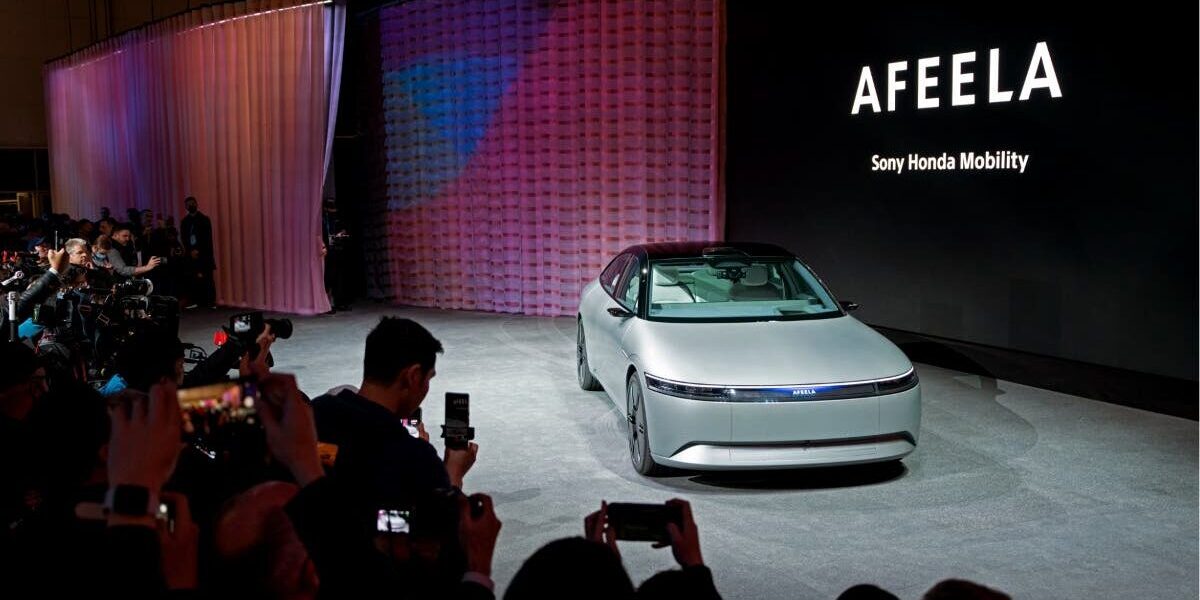
Well, that’s a turn of events, isn’t it? Just as we were gearing up to see the first production models of Afeela hit the streets, the plug has been pulled on the joint venture between Sony and Honda. It’s a move that certainly raises eyebrows and prompts a deeper look into the ever-evolving, sometimes tumultuous, world of electric vehicles.
For those who might have missed the buzz, Afeela was the ambitious brainchild of Sony Honda Mobility, aiming to blend Honda’s automotive prowess with Sony’s technological and entertainment expertise. The promise was a new kind of EV, one that prioritized a seamless digital experience, advanced infotainment, and perhaps even a fresh take on autonomous driving features.
The cancellation, while surprising in its timing, isn’t entirely without precedent in this rapidly shifting industry. Developing a new car, let alone an entirely new EV platform and brand, is an astronomically expensive and complex undertaking. The capital investment, the regulatory hurdles, the supply chain challenges – it all adds up to a monumental task, even for established giants.
So, what does this mean for us, the eager EV buyers and enthusiasts? Primarily, it highlights the immense difficulty of breaking into the established automotive market, even with the backing of two formidable companies. Tesla, for all its revolutionary impact, faced years of struggle and near-bankruptcy before achieving its current standing.
This development also underscores a crucial point: simply having a great concept or even impressive technology isn’t enough. Market timing, manufacturing scalability, distribution networks, and perhaps most importantly, a clear and compelling value proposition that resonates with consumers are all vital ingredients for success.
For Honda, this might be a strategic pivot. They have their own robust EV plans underway, and perhaps the Afeela project was seen as a potential distraction or a less efficient use of resources compared to their in-house initiatives. It’s possible they’ll integrate some of the learned lessons or technological advancements into their standalone EV offerings.
As for Sony, their ambition to enter the automotive space was always intriguing. While Afeela may be off the table, don’t count them out entirely from influencing the future of in-car technology. Their expertise in sensors, entertainment systems, and AI could still find its way into other manufacturers’ vehicles, enhancing the user experience in new ways.
The market for electric vehicles is becoming increasingly competitive. We’re seeing more established automakers bringing compelling EVs to market, alongside a handful of well-funded startups. This heightened competition means that any new entrant needs to be exceptionally strong across the board to survive and thrive.
The Afeela project was certainly an interesting experiment, a glimpse into a future where entertainment and mobility could converge more fully. Its cancellation, however, serves as a stark reminder that even the most promising partnerships can face insurmountable challenges in the high-stakes game of EV development.
Bottom Line: The unplugging of Afeela is a clear signal of the immense hurdles in launching new EV brands, even with major backing. While a setback for a specific vision, it reinforces that only the most robust and strategically sound projects will endure in the competitive EV landscape, and doesn’t necessarily slow the broader EV transition.
This article is based on reporting from CleanTechnica. Analysis and commentary are original to GoEVDaily.