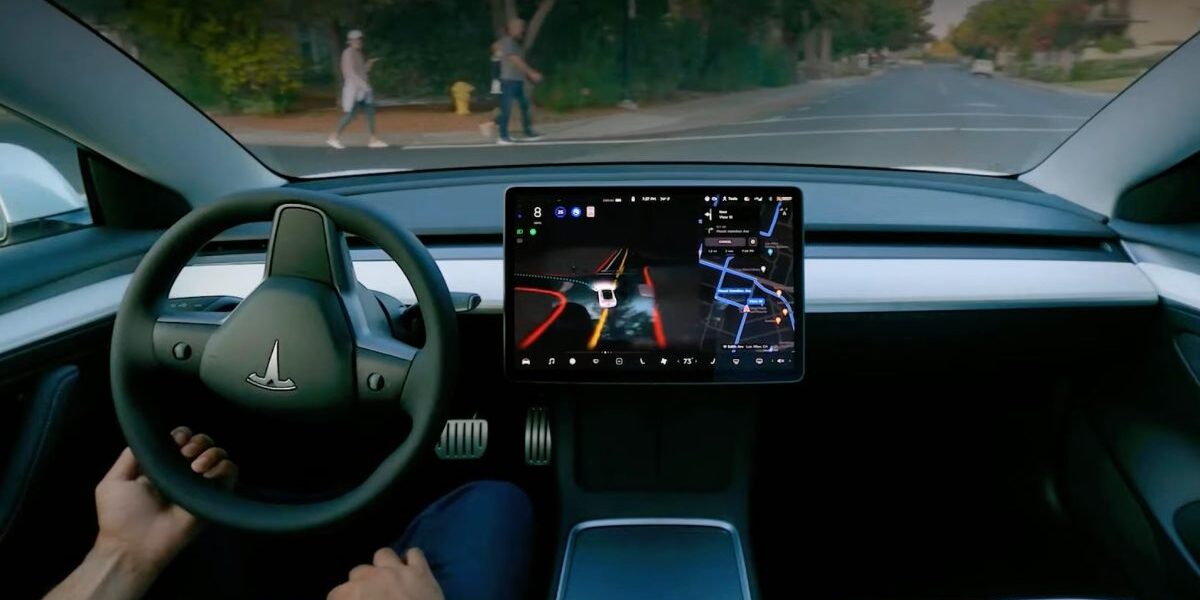
Alright, GoEVDaily readers, let’s talk about something truly significant bubbling up in the world of Tesla’s Full Self-Driving (Supervised) system. If you’re following the latest software updates, you’ve probably heard about v14.3 making its way to HW4-equipped vehicles. While incremental updates are the norm, this one is different – it’s a foundational shift that promises real-world improvements you’ll notice behind the wheel.
The headline-grabbing news, and frankly, the most exciting part, isn’t a new visual or a fancy animation. It’s an architectural overhaul. Tesla has completely re-engineered its AI compiler and runtime system from the ground up, now leveraging something called MLIR. For those not deep in the weeds of compiler infrastructure, think of MLIR as a universal translator and optimizer for different programming languages. By building their system on this, Tesla is essentially making their AI ‘brain’ much more efficient.
What does this mean for you, the driver (or future driver)? Tesla is reporting a whopping 20% faster reaction time. Let that sink in. In the blink-of-an-eye world of driving, especially autonomous driving, a 20% improvement in reaction speed is monumental. This isn’t just about going faster; it’s about safer, smoother, and more confident decision-making on the road. Imagine the difference this makes in complex urban environments, unexpected lane changes, or reacting to sudden braking ahead.
This isn’t just theoretical either. Faster reaction times translate directly to the car perceiving and acting on its surroundings more quickly. This could manifest as quicker responses to traffic light changes, more decisive maneuvers around obstacles, and generally a more ‘human-like’ yet superhumanly quick driving experience. It’s a fundamental performance upgrade that will underpin all future FSD advancements.
Beyond this major architectural leap, v14.3, arriving as software version 2026.2.9.6, also brings some practical, user-facing enhancements. One notable addition is a new parking spot pin on the map, which should make those tricky urban parking situations a bit more straightforward. Who hasn’t wished for a clearer indication of where to aim?
Crucially, Tesla has also implemented better behavior around emergency vehicles and school buses. This is a vital safety enhancement and demonstrates a continued focus on addressing real-world driving scenarios with the utmost care. Proper interaction with these vehicles is non-negotiable for any advanced driver-assistance system, and seeing this explicitly called out is reassuring.
What’s truly fascinating is Tesla’s public acknowledgment of their reliance on MLIR. While the tech community has speculated, this is a clear signal that the company is investing heavily in cutting-edge compiler infrastructure to push the boundaries of their AI. This isn’t just about fixing bugs; it’s about building a more robust, scalable, and ultimately, a more intelligent foundation for FSD’s future.
For EV buyers considering a Tesla, this update underscores the company’s continuous investment in its software platform. While FSD (Supervised) remains a work in progress, these kinds of deep-level improvements demonstrate a commitment to foundational technology that will eventually trickle down to a more capable and reliable driving experience for everyone. It’s a reminder that with Tesla, you’re buying into a vehicle that constantly evolves.
Bottom Line: Tesla’s FSD v14.3 isn’t just another software update; it’s a significant engineering achievement. The move to MLIR for its AI compiler and runtime promises a 20% faster reaction time, laying critical groundwork for safer, more responsive autonomous driving. Coupled with practical improvements for parking and emergency vehicles, this update is a strong indicator of Tesla’s ongoing commitment to pushing the boundaries of vehicle autonomy.
This article is based on reporting from Electrek. Analysis and commentary are original to GoEVDaily.