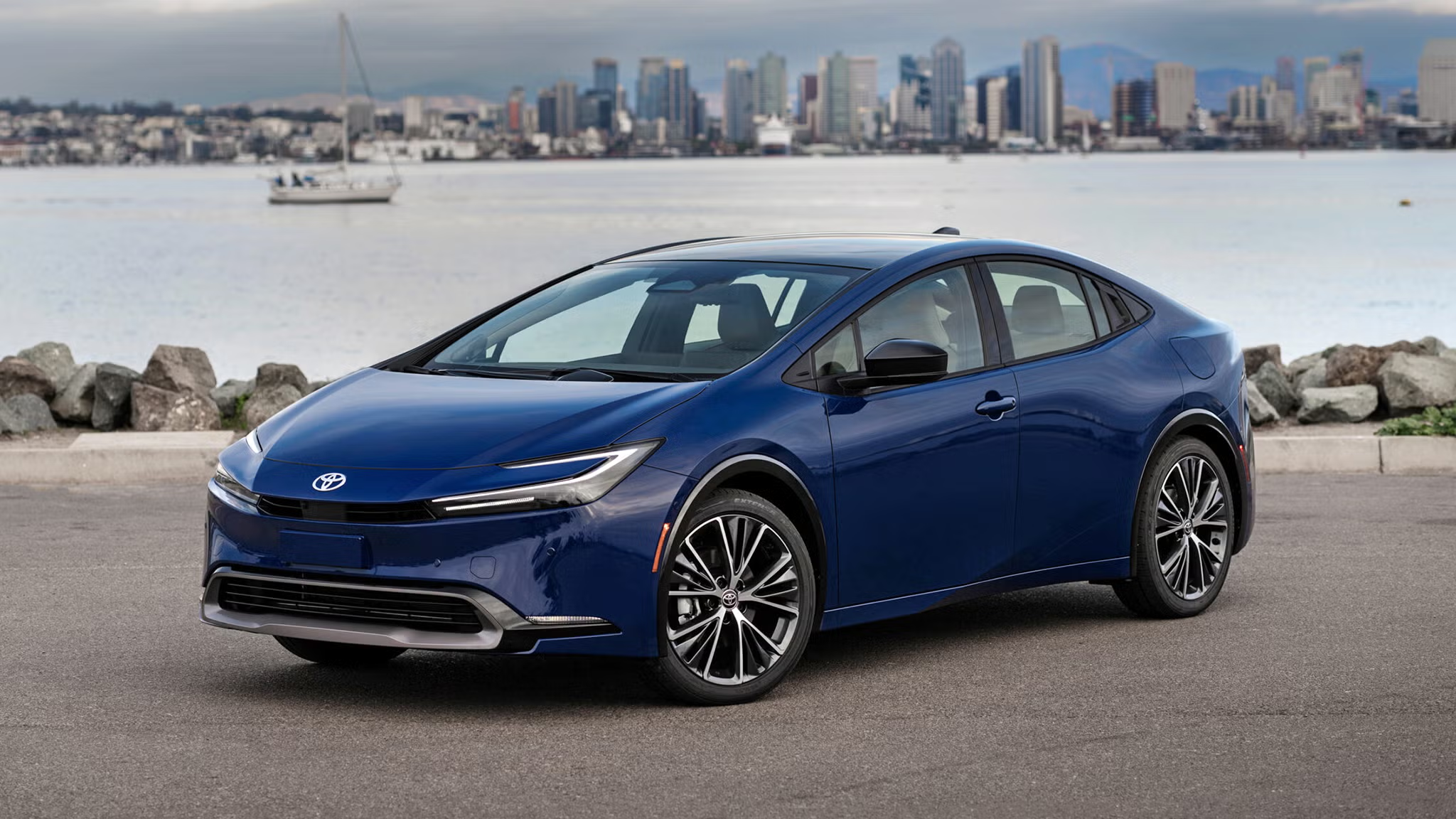

The 2026 Toyota Prius marks the fourth consecutive year of the fifth-generation design, and at this point it’s undeniable—Toyota has finally made a hybrid that’s not just efficient, but genuinely desirable. For 25 years the Prius was the environmental statement vehicle, something you bought to broadcast your values to the world. The 2026 Prius flips that script entirely. You’d buy this car even if you didn’t care about emissions, simply because it’s an excellent vehicle that happens to deliver exceptional fuel economy and low operating costs.
In this comprehensive review, I’ll walk you through every meaningful aspect of the 2026 Prius, from its redesigned hatchback body to its proven hybrid powertrain, helping you determine whether this fifth-generation model deserves a place in your garage.
2026 Prius Overview: Why This Generation Matters
The current generation of Prius, introduced in 2023 and continuing largely unchanged for 2026, represents a complete philosophical shift in hybrid design. Instead of the polarizing wedge shape that screamed “look at me,” Toyota designed a vehicle that simply looks modern and competent. The hatchback silhouette is sleek, the proportions are balanced, and the overall aesthetic wouldn’t look out of place in a luxury brand’s lineup.
The 2026 Prius is available in four trim levels: LE, XLE, Nightshade Edition, and Limited. A plug-in hybrid variant, formerly called the Prius Prime, is available separately. The standard hybrid in this review is the practical choice for most drivers—it requires no charging infrastructure, no compromise on practicality, and delivers some of the best fuel economy in the automotive market without breaking the budget.
2026 Prius Powertrain and Performance
Every 2026 Prius is powered by Toyota’s proven fifth-generation hybrid system, pairing a 2.0-liter four-cylinder gasoline engine with dual electric motors. Front-wheel-drive models produce 194 system horsepower and 139 pound-feet of torque, while the available all-wheel-drive variant adds a rear electric motor, increasing output to 196 horsepower. A continuously variable automatic transmission (CVT) is the sole transmission option.
The immediate electric motor response provides unexpected snap from a standstill. In traffic, the Prius feels responsive and nimble, with the electric motor delivering torque before the gas engine even fully awakens. This is one of the underrated virtues of hybrid design—the instant gratification of electric propulsion without the expensive upfront cost of a full electric vehicle.
The hybrid system is exceptionally refined in the 2026 Prius. Earlier generations exhibited the CVT drone characteristic of the transmission searching for the optimal gear during acceleration. The current generation has largely solved this problem through better calibration and the addition of engine decoupling that makes the system feel more natural. Highway acceleration is linear and predictable, without the rubber-banding sensation that plagued previous models.
The driving experience is genuinely engaging. The Prius feels tossable on winding roads despite its fuel-efficient purpose, aided by a low center of gravity and balanced weight distribution. The steering is responsive without being overly communicative—appropriate for a car that prioritizes efficiency. The suspension strikes an excellent balance between comfort and control, absorbing road imperfections without excessive wallowing.
2026 Prius Fuel Efficiency and EPA Ratings
The standout numbers that make the Prius compelling are the EPA fuel economy ratings. The LE trim, focused exclusively on maximum efficiency, achieves an EPA-estimated 57 miles per gallon city, 56 highway, and 57 combined. That’s the efficiency you’d expect from a plug-in hybrid, yet the standard Prius achieves it without any charging infrastructure or battery depletion concerns.
The remaining trims (XLE, Nightshade, and Limited) are rated at 52 city, 52 highway, and 52 combined with front-wheel drive—still excellent by any standard. The slight efficiency penalty reflects the slightly different mechanical setup and available features. In real-world driving, owners consistently report achieving 50-55 mpg combined under normal conditions, with highway efficiency particularly strong when maintaining steady speeds.
If you choose all-wheel drive, the efficiency penalty is modest but real. The AWD models are rated at 53 city, 54 highway, and 54 combined for the LE, and 49 city, 50 highway, and 49 combined for other trims. The additional traction and winter capability may justify the trade-off for drivers in seasonal climates, but front-wheel drive remains the efficiency choice.
To put these numbers in perspective: a 2026 Prius averaging 54 mpg combined means you’re looking at filling up approximately every 600 miles with a 15-gallon tank. That’s genuine convenience, particularly if you’re a commuter or frequent road-trip taker. The fuel cost savings over five years of typical driving easily recover a substantial portion of the modest hybrid premium.

Exterior Design and Styling
The 2026 Prius exterior represents the full realization of Toyota’s modern design language applied to a hybrid. The overall silhouette is low and wide, grounded and athletic. This is not an apologetic vehicle that hides what it is. Instead, it celebrates the hybrid form factor as a legitimate design genre.
The front fascia features a distinctive grille design with integrated LED headlights that provide excellent visibility and a premium appearance. The character line that runs the length of the vehicle creates visual interest without aggressive sculpting. At the rear, horizontal LED taillights create a sophisticated light bar design.
The hatchback body provides genuine practicality. With 23.8 cubic feet of cargo capacity with the rear seats folded, the Prius swallows more gear than you’d expect. The rear window is large and the opening is unobstructed, making loading easy. The 60/40 split rear seatbacks fold completely flat, transforming the Prius from family hauler to gear carrier in seconds.
Available wheel options range from economical 17-inch designs on the LE through 19-inch alloy wheels on upper trims. The aesthetic quality of the 19-inch wheels available on the XLE and above genuinely elevates the visual impact—they’re not afterthoughts bolted onto an economy car, but integrated design elements that enhance the overall proportions.
The Nightshade Edition, introduced for 2026, deserves special mention. It takes the XLE package and adds black wheels, black body trim, and carbon fiber interior accents. The visual result is distinctly more aggressive and contemporary compared to the standard versions, appealing to buyers who want their Prius to feel like a purposeful design choice rather than a compromise.
Color options have expanded for 2026, with offerings including traditional Silver Metallic and Blueprint through more adventurous options like Reservoir Blue and Roan Brown. The paint quality is excellent across the lineup, with deep color saturation and quality finishes that belie the car’s practical positioning.

Interior Design and Comfort
Opening the door of the 2026 Prius reveals an interior that prioritizes functionality without sacrificing sophistication. The dashboard is modern and uncluttered, with a driver-focused cockpit layout that puts controls where you expect them.
The front seats are surprisingly comfortable for a compact car. The LE includes manually adjustable seats with adequate padding, while the XLE and above feature power adjustment and genuine heating capability—a meaningful upgrade that extends the Prius’s seasons of comfort. Legroom is generous for front occupants, with the driving position being upright and commanding.
The rear seat is the primary weakness of the Prius interior. While improved from earlier generations, tall adults will find head and legroom challenged on longer trips. The seatback angle is fairly upright, limiting lounging comfort. For families with children or urban commuters traveling alone, this is non-issue. For frequent road trips with rear passengers, it’s worth testing before purchase.
Material quality has received substantial attention in the current generation. The LE trim uses hard plastics and cloth upholstery that are durable but functional. The XLE upgrades to synthetic leather upholstery (SofTex) that feels reasonably premium and resists wear better than cloth. The Nightshade Edition and Limited add carbon fiber accents that add genuine visual interest to the cabin.
Storage is thoughtfully designed. Cup holders are appropriately sized and positioned. The center console provides useful hidden storage. Door pockets are deep and useful. The overall impression is of a compact car that doesn’t feel cheap—it feels efficient and purposeful.
Cargo capacity deserves emphasis: 23.8 cubic feet is genuinely spacious. You can pack a week’s worth of groceries, luggage for a weekend trip, and sports equipment without compromise. The hatchback design is far more practical than the sedan format for real-world living, particularly if you’re the primary shopper or transport gear regularly.

Technology and Infotainment
The 2026 Prius features Toyota’s Audio Multimedia infotainment system, with differentiation based on trim level. The base LE includes an 8-inch touchscreen, while the XLE, Nightshade, and Limited can be upgraded to a larger 12.3-inch touchscreen for $735.
All models include wireless Apple CarPlay and wireless Android Auto as standard, a welcome inclusion that eliminates the need to manually plug in your phone every drive. The system is responsive and intuitive, without unnecessary animation or complexity. Voice commands work reliably for music control and basic navigation.
The 8-inch base screen is perfectly functional, providing clear graphics and responsive touch feedback. If you spend significant time in the vehicle or use the navigation system frequently, the larger 12.3-inch screen is worth the investment. Its vertical orientation provides excellent visibility and can display more information simultaneously. However, the base system is not a handicap—it’s a functional solution that doesn’t justify upgrading for most buyers.
Audio quality is decent with the standard six-speaker system. The LE trim includes this baseline setup, which handles voice calls and music playback adequately. Upper trims don’t advertise premium audio upgrades, suggesting the base system is Toyota’s standard across the lineup.
Connectivity features are comprehensive. Six USB-C ports are standard, with wireless charging available on the XLE and above. The system integrates Toyota’s connected services, including Safety Connect (emergency assistance, roadside help, collision notification), Remote Connect (remote start, vehicle finder, guest driver monitoring), and Wi-Fi Connect. These services are extremely useful, with trial subscriptions provided.
Safety Features and Ratings
The 2026 Prius comes standard with Toyota Safety Sense 3.0, an advanced driver assistance system that’s become Toyota’s safety cornerstone. This system includes automatic emergency braking with pedestrian detection, adaptive cruise control with lane-centering capability, lane departure warning with steering assist, automatic high-beam headlights, traffic sign recognition, proactive driving assist, and blind-spot monitoring with rear cross-traffic alert.
The system operates seamlessly in real driving situations. The adaptive cruise control is particularly refined, maintaining distance from the vehicle ahead while handling acceleration and braking smoothly. The lane-centering assist works on both highway and local roads, genuinely reducing driver fatigue during long drives. The automatic emergency braking with pedestrian detection provides tangible safety margins in emergency situations.
Parking assistance features vary by trim. The LE includes rear parking sensors with automatic braking for only $35 additional. The XLE and above include them as standard. The Limited can be equipped with a surround-view camera system (four cameras providing 360-degree visibility) and Advanced Park, a semi-autonomous parking system that handles steering, acceleration, braking, and gear changes for parallel parking or backing into spaces.
Crash test results are strong. The similar 2025 Prius earned a five-star overall rating from NHTSA and earned Insurance Institute for Highway Safety Top Safety Pick+ designation, the highest safety award. The 2026 benefits from identical structure and safety systems, suggesting similar performance in crash testing.
2026 Prius Trim Levels and Pricing
The 2026 Prius is offered in four clearly differentiated trims, with pricing starting at an accessible $29,745 (including $1,195 destination). This structure makes hybrid efficiency available to practical buyers without forcing them into premium trim levels.
LE ($28,550 before destination): The base LE is the efficiency champion, achieving the highest EPA ratings through weight reduction and optimized gearing. It includes Toyota Safety Sense 3.0, 8-inch touchscreen with wireless Apple CarPlay/Android Auto, keyless entry and start, cloth seats, manually adjustable driver seat, LED exterior lighting, and 17-inch alloy wheels. The LE strips away conveniences like heated seats and power seat adjustment, but delivers on the core promise of efficient, reliable transportation. This trim is best for budget-conscious buyers who don’t mind basic interior furnishings.
XLE ($31,995 before destination): My recommended sweet spot for most buyers, the XLE adds meaningful comfort and convenience upgrades: power-adjustable driver seat with lumbar support, heated front seats, synthetic leather upholstery, heated steering wheel, wireless smartphone charging, automatic wipers, and 19-inch alloy wheels. The XLE represents excellent value—you’re getting genuine comfort upgrades without the luxury pricing of the Limited. The efficiency penalty compared to the LE is negligible in real-world driving.
Nightshade Edition ($32,800 before destination): New for 2026, this cosmetic variant of the XLE adds black wheels, black body trim, carbon fiber interior accents, and all-black interior appointments. It’s identical mechanically to the XLE but provides a more aggressive visual identity. Buyers who want their Prius to feel distinctive should consider this option.
Limited ($35,565 before destination): The premium trim adds the 12.3-inch touchscreen as standard, ventilated front seats, power liftgate, universal home remote, auto-dimming rearview mirror, fixed glass roof, and available heated rear seats. The Limited is best suited for buyers who spend substantial time in their vehicles and want maximum feature content.
All-Wheel Drive: Available on every trim for an additional $1,400, AWD adds a rear electric motor and electronic on-demand all-wheel-drive capability. Power increases to 196 horsepower, though efficiency decreases slightly. AWD is worthwhile for drivers in regions with winter weather or unpaved road access, but FWD is the right choice for most buyers.
2026 Prius vs. Competitors: Where It Stands
vs. Honda Insight: Honda’s closest competitor delivers similar efficiency (52 city, 56 highway) with a sportier driving character. However, the Prius offers superior cargo capacity, better interior technology, and stronger fuel economy in real-world testing. The Prius also holds resale value better long-term. Winner: Prius for practicality and total value.
vs. Hyundai Elantra Hybrid: Hyundai’s increasingly competitive hybrid sedan offers aggressive styling and pricing, with comparable efficiency (52 city, 56 highway). The Elantra includes a longer warranty and competitive features. The Prius maintains its efficiency advantage, particularly in the LE trim, and offers superior cargo space through the hatchback design. Winner: Prius for efficiency and cargo flexibility.
vs. Toyota Corolla Hybrid: Toyota’s own sedan-based alternative delivers solid efficiency but sacrifices the Prius’s superior fuel economy and distinctive styling. The Corolla is slightly smaller and more affordable, but the Prius’s hatchback practicality and efficiency leader status make it the better choice for efficiency-focused buyers. Winner: Prius for economy and versatility.
vs. Mazda3 (Gasoline): While not a direct hybrid competitor, the Mazda3 delivers excellent driving dynamics and interior quality. However, it consumes significantly more fuel (28 city, 35 highway), making the Prius dramatically cheaper to operate over time. Winner: Prius for operating costs.
Driving Experience: Daily Reality
Living with the 2026 Prius day-to-day is an exercise in efficient practicality with surprising engagement. The transmission operation is smooth, with the CVT feeling less robotic than in previous generations. Electric-motor response at stoplights is genuinely snappy, making urban driving feel responsive despite modest overall horsepower.
On the highway, the Prius maintains stability and control, with adequate power for merging and passing. Wind and tire noise are the primary auditory considerations at sustained speeds—the drag coefficient of 0.27 helps, but wind noise on the highway is marginally louder than some competitors. It’s not a detraction, but it’s noticeable during long drives.
The regenerative braking system works invisibly, capturing energy during deceleration and feeding it back to the battery. The transition between regenerative and friction braking is seamless—you won’t feel any difference or hesitation. The brake pedal offers good modulation and feedback, making precise control straightforward.
Parking is manageable, though outward visibility is challenged. The greenhouse is sleek and modern, which hurts visibility toward the rear quarters. The available surround-view camera system effectively addresses this limitation on upper trims, making parallel parking almost trivial.
Winter driving is competent with FWD, though AWD provides noticeably better traction and confidence in snow. The electronic on-demand system works transparently, providing rear-wheel power when the front wheels slip without creating understeer concerns. If winter driving is part of your annual routine, the $1,400 AWD investment is worthwhile.

Reliability and Maintenance
The 2026 Prius benefits from four years of real-world production refinement on the current platform. The hybrid system components are proven and thoroughly understood by Toyota service technicians. Consumer Reports ranks the Prius among the most reliable vehicles in its class, and owner satisfaction ratings are consistently strong.
Maintenance costs are lower than comparable gas-only vehicles, primarily due to regenerative braking reducing brake wear. Many owners report brake service intervals exceeding 100,000 miles, compared to the 50,000-mile average for conventional vehicles. Oil change intervals are standard at 5,000-10,000 miles depending on driving conditions.
The hybrid battery is covered under Toyota’s 8-year/100,000-mile warranty. While battery replacement is expensive if needed outside warranty, the reliability of modern hybrid batteries means this is increasingly unlikely. Real-world data shows Prius batteries routinely lasting 150,000+ miles without significant degradation.
Warranty coverage includes 3-year/36,000-mile basic coverage and 5-year/60,000-mile powertrain coverage. This is competitive with industry standards, though not best-in-class. Extended warranty options are available for buyers planning to keep their Prius beyond the warranty period.
Frequently Asked Questions About the 2026 Prius
Q: Is the 2026 Prius a plug-in hybrid?
A: No. The standard 2026 Prius is a traditional hybrid that cannot run on electricity alone for extended distances. Toyota offers the Prius Plug-in Hybrid (formerly Prius Prime) as a separate model with a larger battery and charging capability. The standard hybrid is better suited for traditional driving patterns without home charging infrastructure.
Q: What’s the difference between the LE and XLE trims?
A: The LE prioritizes efficiency and affordability with manual seat adjustment, cloth upholstery, and basic features. The XLE adds power seat adjustment, heated seats, synthetic leather upholstery, wireless charging, and 19-inch wheels. The XLE is worth the premium for most buyers seeking comfort improvements without the cost of the Limited.
Q: How does the Nightshade Edition differ from the XLE?
A: The Nightshade is cosmetically identical to the XLE mechanically, but adds blacked-out exterior trim, black wheels, carbon fiber interior accents, and all-black interior. It’s a styling variant designed to appeal to buyers wanting a more aggressive visual presence. Mechanically and in features, it’s equivalent to the XLE.
Q: Should I choose all-wheel drive?
A: AWD adds $1,400 and costs approximately 3-5 mpg in fuel economy depending on driving conditions. It’s worthwhile if you encounter winter weather regularly or need additional traction. For most drivers in temperate climates, FWD is the economical choice.
Q: Is the 2026 Prius the same as the 2025 model?
A: Yes. The 2026 Prius is mechanically and substantially identical to the 2025 model. It’s the fourth year of the fifth-generation design with no major changes. Pricing and available trims remain stable, making either model an excellent choice. If you find a 2025 model year at a discount, that’s a worthwhile purchase.
Q: What’s the cargo capacity?
A: 23.8 cubic feet with the rear seats in place, expanding significantly when the 60/40 split seatbacks are folded. This is genuinely spacious for a compact vehicle—sufficient for weekly groceries, luggage, and typical cargo needs.
Q: How reliable are modern Prius vehicles?
A: The Prius is among the most reliable vehicles produced, ranking in the top tier for overall dependability. The hybrid system is proven over three decades of production. Hybrid-specific components are well-understood and durable, with battery longevity being particularly strong in real-world ownership.
Pros and Cons of the 2026 Prius
Advantages
- Outstanding Fuel Economy: The 54-57 mpg range means fuel stops are infrequent and fuel costs are dramatically lower than gasoline-only vehicles.
- Hatchback Practicality: 23.8 cubic feet of cargo capacity provides genuine versatility beyond typical sedan limitations.
- Modern, Attractive Design: The fifth-generation Prius finally achieves the goal of making a hybrid desirable beyond environmental conviction.
- Proven Reliability: Three decades of Prius production mean the hybrid system is thoroughly refined and dependable.
- Responsive Hybrid Powertrain: Electric motor response makes the Prius feel more engaging than its horsepower figures suggest.
- Comprehensive Safety Standard: Toyota Safety Sense 3.0 is standard across the lineup, providing advanced protection features typically reserved for luxury vehicles.
- Excellent Value Across Trim Levels: The pricing structure makes hybrid efficiency accessible without forcing buyers into premium trims.
- Low Operating Costs: Fuel savings and reduced brake maintenance combine for dramatically lower operating costs than conventional vehicles.
Disadvantages
- CVT Transmission Characteristics: While improved, the continuously variable transmission can produce an undesirable droning sound during hard acceleration.
- Tight Rear Seat: Tall rear passengers will find head and legroom limited on longer journeys.
- Wind Noise at Highway Speeds: Despite low drag, wind noise is more pronounced than some competitors at sustained highway speeds.
- Limited Performance: With 194-196 horsepower, the Prius isn’t quick by sports car standards, though it’s adequate for practical driving.
- Visibility Challenges: The sleek roofline and small rear window create visibility challenges when parking, though backup cameras help.
- Interior Color Limited: Interior appointments are limited to black or gray, limiting personalization options.
- No Performance Warranty: The warranty is competitive but not class-leading compared to some competitors offering longer coverage.
Final Verdict: Is the 2026 Prius Worth Buying?
The 2026 Toyota Prius is one of the most sensible vehicle purchases available in today’s market. It delivers on the fundamental promise of hybrid transportation—exceptional fuel economy with no charging infrastructure required—while finally achieving a design and driving experience that don’t require you to compromise on anything beyond performance and rear-seat comfort.
For practical drivers who understand that a vehicle’s primary purpose is reliable transportation, the 2026 Prius is exceptional. It costs less than many gasoline-only sedans, delivers dramatically lower fuel costs, provides adequate cargo space through the hatchback design, and includes safety features that would be premium upgrades in competitor vehicles.
The economics are straightforward: if you drive 12,000+ miles annually, the fuel savings compared to a conventional car will recover a significant portion of the hybrid premium within the five-year warranty period. The reliability is proven through three decades of production. The practicality is genuine, with 23.8 cubic feet of cargo space and a modern cabin that doesn’t feel like a compromise vehicle.
The XLE trim represents my recommended purchase point for most buyers. You’re getting meaningful comfort upgrades (power seats, heated seats, wireless charging) for a $2,250 premium over the LE, while maintaining excellent value. The Nightshade Edition appeals to buyers wanting a more distinctive visual identity. The Limited is worthwhile if you spend substantial time in the vehicle and want maximum technology integration.
Recommended for: Practical commuters, efficiency-focused buyers, those seeking lower operating costs, families needing cargo flexibility, buyers wanting proven hybrid reliability.
Not recommended for: Performance enthusiasts, drivers requiring maximum rear-seat space, those committed to zero-emission driving (consider the Prius Plug-in Hybrid or full electric vehicle), buyers prioritizing luxury appointments.
The 2026 Prius proves that hybrid vehicles have transitioned from niche products to genuinely excellent mainstream vehicles. It’s simply a good car that happens to be exceptionally efficient—which is exactly what drives long-term satisfaction and recommendation to others.
If you’re shopping for a hybrid vehicle in 2026, test drive the Prius. You’ll likely discover that it exceeds expectations in both driving enjoyment and practical value, making a compelling case for the purchase.