EV Market Surges Mid-2026: Innovation Drives Mainstream Adoption
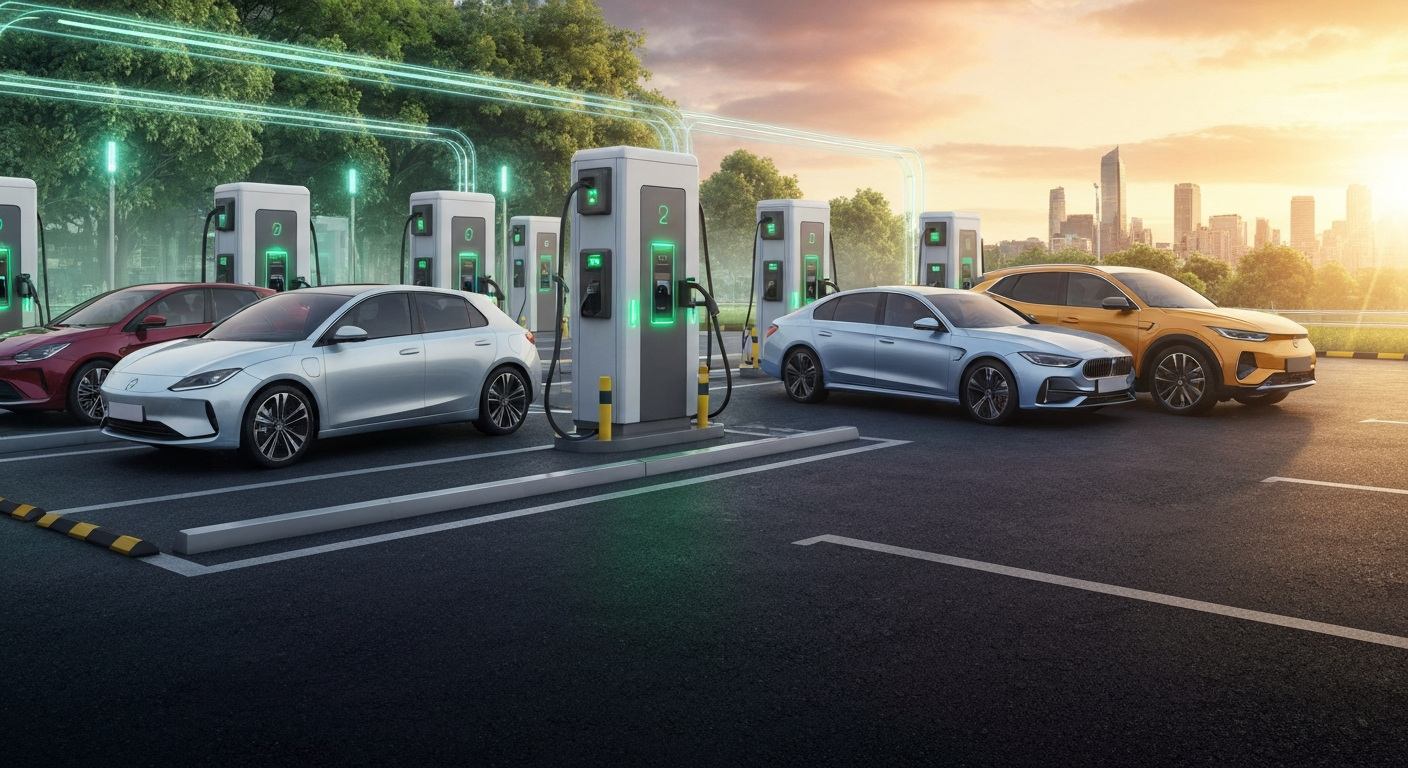
The Electrifying Pace of Change: An EV Market Snapshot, May 2026
As of early May 2026, the electric vehicle (EV) industry finds itself at a pivotal juncture, a testament to relentless innovation and burgeoning consumer demand. What was once a niche segment for early adopters has firmly cemented its place in the mainstream automotive landscape, driven by advancements that continue to redefine mobility. The past year and a half, in particular, has seen an acceleration in development and adoption, painting a vibrant picture for the future of transportation.
Battery Breakthroughs Powering the Revolution
At the heart of the EV revolution are the continuous strides made in battery technology. Manufacturers and research institutions worldwide are pushing the boundaries of energy density, charging speed, and longevity, while simultaneously driving down costs. While solid-state batteries continue to promise a revolutionary leap, often appearing in advanced prototypes and limited production runs for premium models, the current mainstream market is benefiting from significant enhancements in lithium-ion chemistries, including widespread adoption of Lithium Iron Phosphate (LFP) for more affordable and durable options.
- Increased Range: The average range of new EVs has comfortably surpassed the 300-mile mark for many models, effectively alleviating range anxiety for the vast majority of drivers.
- Faster Charging: Ultra-fast charging capabilities are now standard on many new vehicles, with 80% charge times often achievable in under 20 minutes, provided compatible infrastructure is available.
- Cost Reduction: Battery pack costs have continued their downward trend, making EVs more competitive with their internal combustion engine (ICE) counterparts, especially when factoring in lower running costs.
Charging Infrastructure: Expanding Horizons, Persistent Challenges
The build-out of a robust and accessible charging infrastructure remains a critical pillar for sustained EV growth. As of May 2026, significant progress has been made globally, particularly in urban centers and along major highway corridors. The widespread adoption of the North American Charging Standard (NACS) in North America has streamlined the user experience, while Europe and Asia continue to expand their dense networks.
However, challenges persist. Rural areas still lag in charging availability, and the demand for reliable, high-speed public chargers at peak times can still lead to queues in popular locations. Furthermore, solutions for apartment dwellers without dedicated home charging remain a key focus for innovation and policy.
Fierce Competition and Market Diversification
The EV market is a hotbed of intense competition. While pioneering companies like Tesla continue to innovate, legacy automakers have rapidly closed the gap, leveraging their vast manufacturing capabilities and established dealer networks. New entrants from Asia and Europe are also making significant inroads, offering compelling alternatives across various price points and segments.
The focus has broadened beyond luxury and performance. The market is witnessing a surge in affordable compact EVs, robust electric trucks, and versatile electric SUVs, catering to a wider demographic. This diversification is critical for mass adoption, as consumers demand choice and utility tailored to their diverse needs.
Policy, Sustainability, and the Road Ahead
Government policies continue to play a crucial role in accelerating EV adoption through purchase incentives, infrastructure funding, and increasingly stringent emissions regulations for ICE vehicles. The emphasis on sustainability extends beyond the tailpipe, with growing attention paid to ethical sourcing of battery materials, closed-loop recycling programs, and the overall carbon footprint of EV manufacturing.
Looking ahead, the latter half of 2026 and beyond promises even more exciting developments. We anticipate further breakthroughs in battery chemistry, potentially bringing solid-state technology closer to mass production. Autonomous driving features are becoming more integrated into EV platforms, offering a glimpse into a truly future-forward mobility experience. The used EV market is also maturing, providing more accessible entry points for consumers.
The electric vehicle industry in May 2026 is not just growing; it's evolving at an unprecedented rate, demonstrating resilience, innovation, and a clear path toward a cleaner, more sustainable automotive future. GoEVDaily will continue to bring you the latest as this exciting journey unfolds.

Norway’s Bold Move: 20 Candela Electric Ferries Chart a Course for Sustainable Water Travel
Norway’s Boreal orders 20 Candela electric ferries, replacing diesel ships. A huge leap for sustainable water travel and a testament to EV technology’s widespread adoption.

Europe’s 2040 Climate Goals: What It Means for Your Next EV
Europe’s ambitious 2040 climate targets will profoundly impact the global EV market, accelerating innovation, infrastructure, and energy security for electric vehicle owners.

From Toxic Past to Green Future: New Mexico Superfund Site Embraces Solar & Hydrogen for EV Grid Power
New Mexico Superfund site transforms into a 50-megawatt solar farm, producing green hydrogen for 24/7 clean power. Critical for cleaner EV charging.